Written by the Concrete Repair Plus crew
15+ years of hands-on concrete work across Toronto and the GTA. Read about us or The Plus Standard we publish every job against.
If you live in Scarborough, Birch Cliff, Wexford, or anywhere along Kingston Road, Lawrence East, Eglinton, or Morningside, you've seen the surface scaling that road salt produces on concrete. Pitted driveways, spalled porch edges, and crumbling steps are nearly universal across East Toronto's residential streets — and it's almost entirely a salt problem.
The Three Ways Salt Destroys Concrete
1. Chemical Attack on the Cement Paste
Chloride ions from rock salt react with calcium hydroxide in the cement paste, breaking down the bonds that give concrete its strength. The surface becomes weaker, more porous, and more vulnerable to mechanical damage.
2. Accelerated Freeze-Thaw Cycling
Salt lowers the freezing point of water — that's why we use it on roads. But on your concrete, that means the freeze-thaw cycle happens at lower temperatures and more frequently. A normal Toronto winter delivers 100+ freeze-thaw cycles. Salt-loaded concrete experiences significantly more.
3. Rebar Corrosion
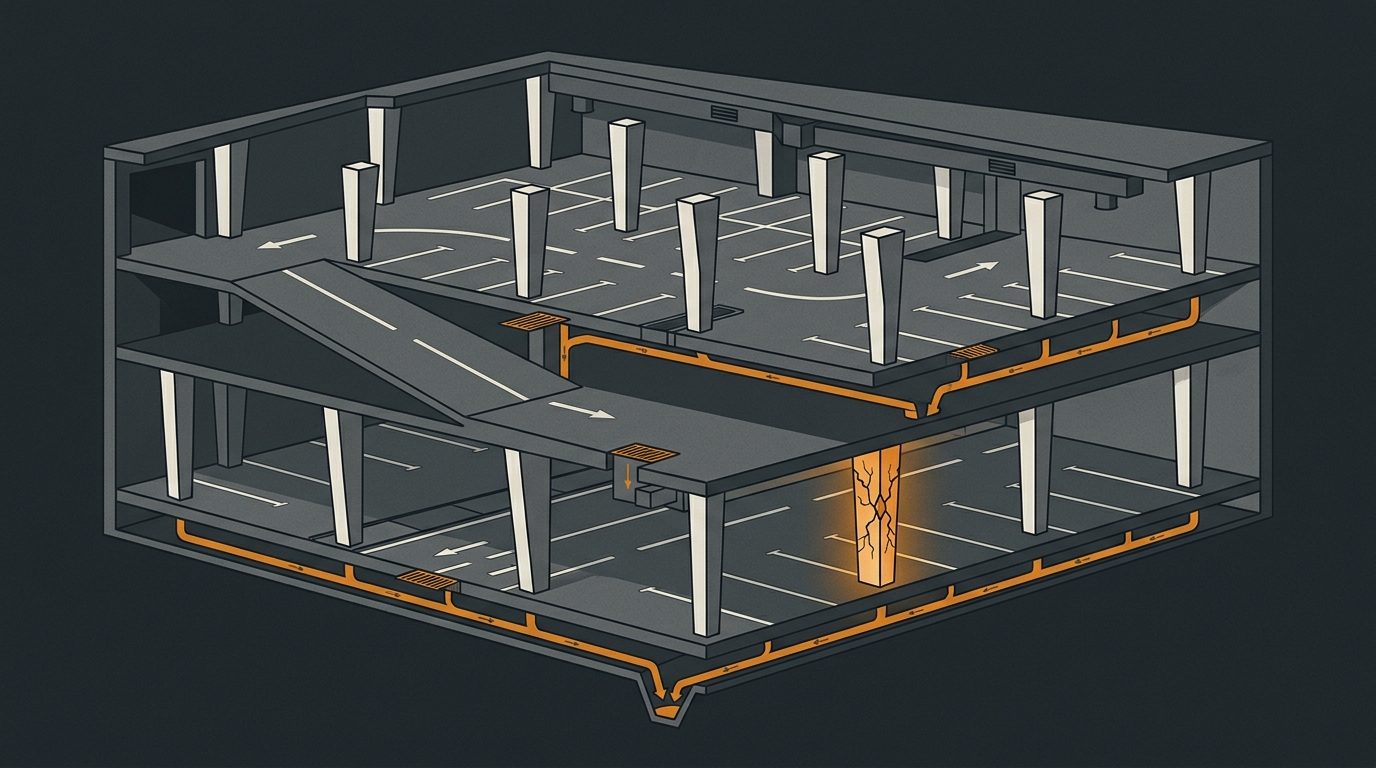
Chloride ions penetrate the concrete and reach the reinforcing steel. Once corrosion starts, the rebar expands as it rusts — sometimes by 7–10× its original volume — and that pressure cracks the concrete from the inside out. The exposed rebar you see on aging Toronto driveways is the final stage of this process.
What Salt Damage Looks Like (Stages)
- Surface darkening: First sign. The concrete absorbs salt water and stays slightly darker than the surrounding area.
- Pitting: Small surface pits as the cement paste begins breaking down.
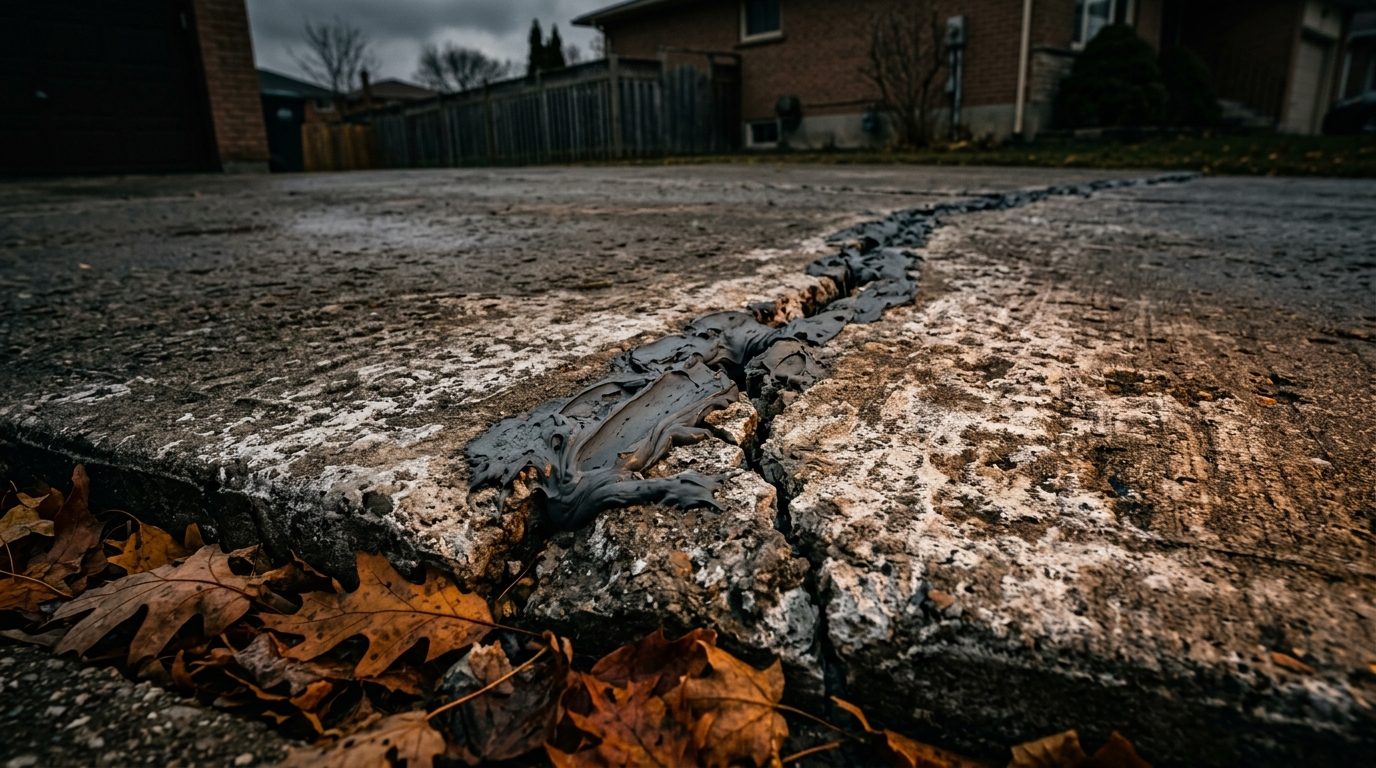
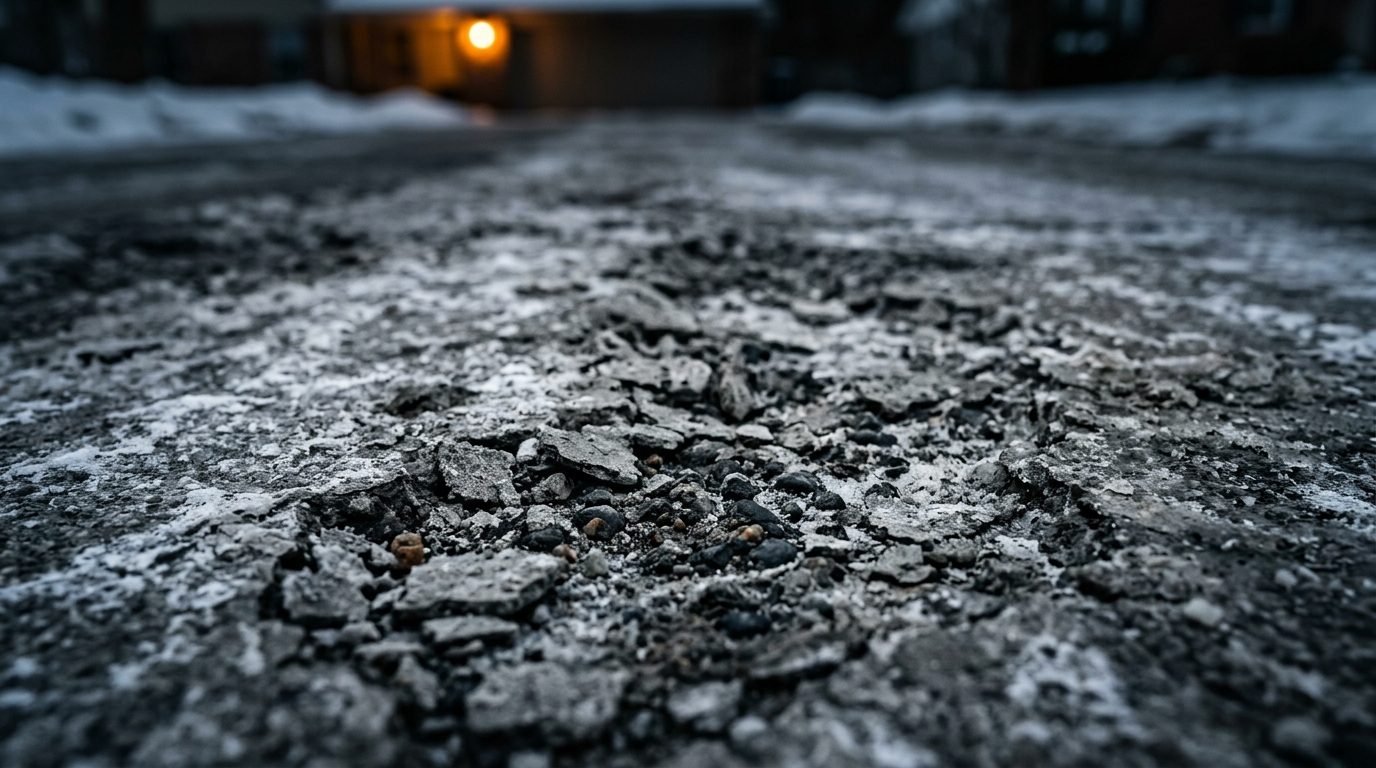
- Surface scaling: Thin sheets of the surface layer flake off. The most visible stage.
- Spalling: Larger chunks break away, exposing the aggregate underneath.
- Structural failure: Rebar corrosion has cracked the slab from within. Replacement scope.
The Four-Part Prevention Strategy
1. Seal Your Concrete Every 2–3 Years
This is the single most effective step. A penetrating concrete sealer closes the surface porosity and stops chloride ions from penetrating the slab. Apply in fall (mid-September to mid-October) before the first hard freeze.
2. Switch from Rock Salt to Sand or CMA
Sand provides traction without chemical attack. Calcium magnesium acetate (CMA) is a more concrete-friendly de-icer that costs more than rock salt but a fraction of the cost of premature concrete replacement. Most Toronto homeowners can switch entirely.
3. Rinse Concrete in Spring
Once temperatures stay above freezing in April, pressure-wash all concrete surfaces to remove the winter's salt residue. This single annual rinse extends sealer life and reduces ongoing damage.
4. Repair Early
Surface pitting and minor scaling respond well to resurfacing. Wait until the damage reaches spalling stage and the repair scope (and cost) doubles or triples. Active crack repair is even more time-sensitive — every winter widens the damage.
What If My Concrete Already Looks Like This?
If you have visible scaling or spalling on your driveway, porch, or steps, the answer is rarely full replacement — most salt-damaged concrete in Scarborough is restorable with proper surface preparation, polymer-modified resurfacing, and protective sealing. Book a free assessment and we'll tell you honestly whether your slab is a repair or replacement candidate.