Written by the Concrete Repair Plus crew
15+ years of hands-on concrete work across Toronto and the GTA. Read about us or The Plus Standard we publish every job against.
If you live in Scarborough, East York, or anywhere in the Toronto area, you've probably noticed that concrete doesn't last as long here as it seems to in other parts of the country. Driveways crack. Porch steps crumble. Garage floors pit and spall. It's not bad luck — there's a very specific reason why Toronto concrete deteriorates faster than almost anywhere else in Canada, and understanding it is the first step to protecting your investment.
The Real Reason Toronto Concrete Fails: Freeze-Thaw Cycles
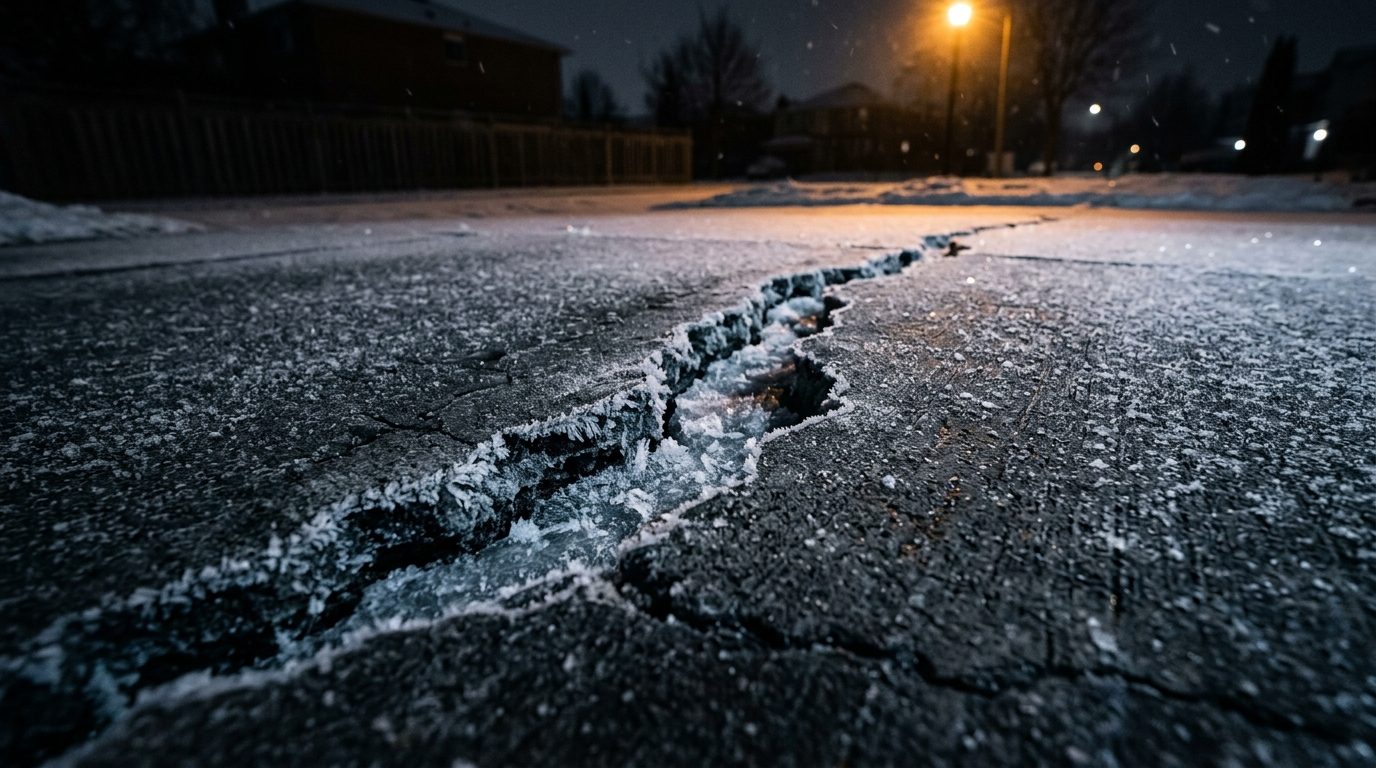
Toronto sits in a climate zone that experiences an unusual combination of conditions — cold enough for regular freezing temperatures, but warm enough to thaw frequently throughout the winter. This creates what engineers call freeze-thaw cycling, and it is concrete's worst enemy. Here's how the damage happens step by step:
- Water enters the concrete through its natural porosity, surface cracks, or joints.
- Temperatures drop below zero and the water inside the concrete freezes.
- Water expands by approximately 9% when it freezes.
- This expansion creates internal pressure that exceeds the concrete's tensile strength.
- Micro-cracks form — often invisible at first.
- Temperatures rise, the ice melts, more water enters through the new micro-cracks.
- The cycle repeats — usually 100+ times per year in the Toronto area.
Each cycle makes the damage slightly worse. What begins as microscopic stress fractures becomes surface scaling, then spalling, then structural cracks, then full deterioration. The process can take 5–15 years depending on the quality of the original concrete pour and whether the surface was properly sealed.
Why Scarborough and East Toronto Are Especially Vulnerable
Scarborough and East York face a specific combination of factors that accelerates concrete deterioration beyond the average Toronto rate:
Aging Housing Stock
Most homes in Wexford, Birch Cliff, Victoria Village, Don Mills, Parkwoods, and the surrounding neighbourhoods were built between the 1950s and 1970s. The concrete driveways, porches, and steps on these properties are 40–60 years old. Concrete has a design life — and most of the original concrete in East Scarborough has reached or exceeded it. It's not failing because it was poorly installed — it's failing because it's old and has endured decades of freeze-thaw cycling.
Road Salt Exposure
Kingston Road, Lawrence Avenue East, Eglinton Avenue, and Morningside Avenue are among the most heavily salted roads in the GTA during winter. Salt is highly effective at melting ice — and highly destructive to concrete. Salt lowers the freezing point of water, which means freeze-thaw cycling happens at lower temperatures and more frequently. Salt also attacks the calcium silicate hydrate that gives concrete its strength, causing surface scaling and accelerated deterioration. Properties near these major corridors experience significantly faster concrete degradation than those on quiet residential streets.
Poor Original Installation
Many 1960s and 1970s residential concrete pours in Scarborough were done with lower water-to-cement ratios than modern standards require, inadequate air entrainment (the tiny air bubbles that give concrete room to expand during freezing), and minimal curing time. This means much of the original concrete in East Toronto neighbourhoods was never as durable as it should have been — and it shows today.
The Five Types of Concrete Damage Caused by Toronto Winters
1. Surface Scaling
The surface layer of concrete flakes off in thin sheets, leaving a rough, pitted appearance. This is almost always caused by freeze-thaw cycling combined with salt exposure. It starts cosmetically but becomes structural if left untreated.
2. Spalling
Larger chunks of concrete break away from the surface, often exposing the aggregate underneath. Spalling indicates that water has penetrated beyond the surface layer and the freeze-thaw damage is now occurring deeper within the concrete.
3. Cracking
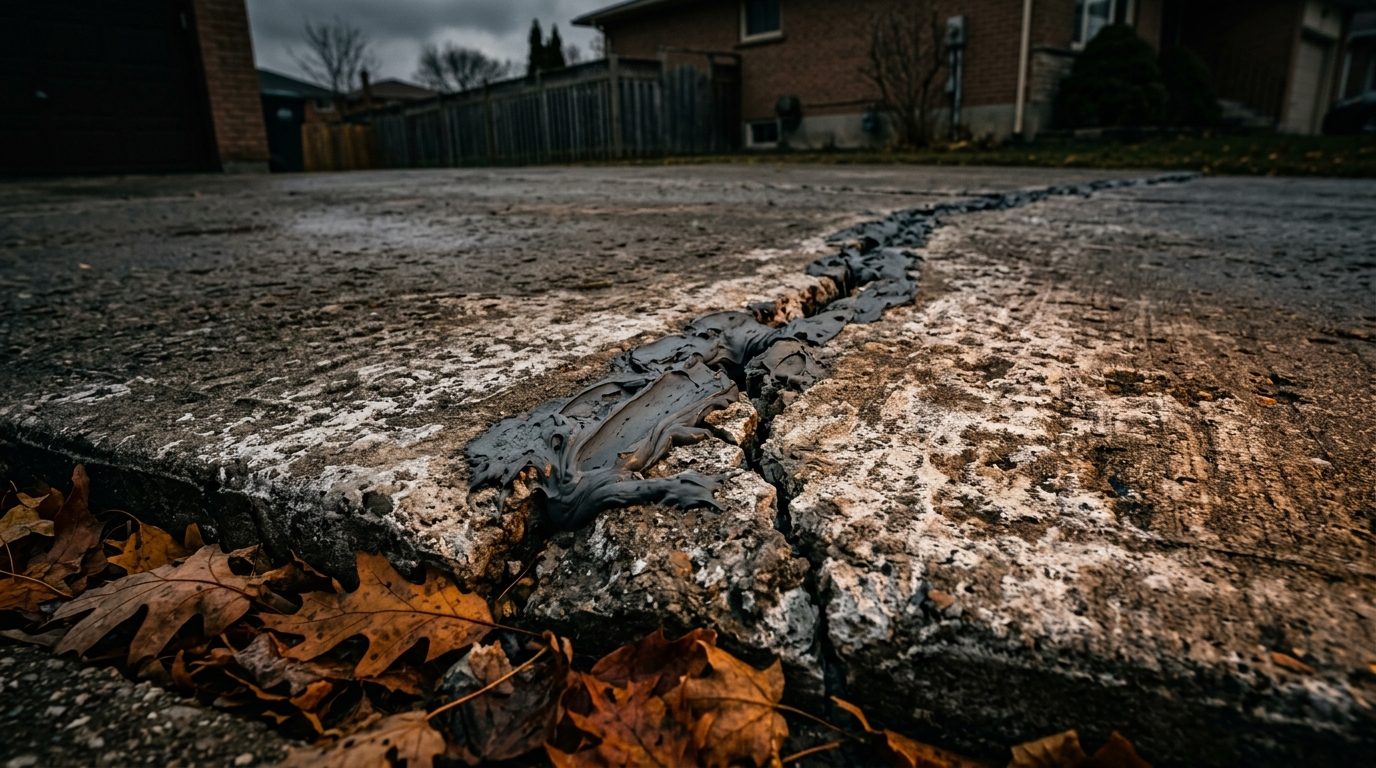
Cracks range from hairline surface cracks to wide structural failures. Hairline cracks are primarily cosmetic but allow water entry that accelerates future damage. Wider cracks — especially those wider than 3mm or with vertical displacement — indicate structural movement and require professional concrete crack repair with polyurethane or epoxy injection.
4. Heaving
The concrete slab lifts, often unevenly, creating a trip hazard and damaging adjacent structures. Heaving is caused by frost penetrating the soil beneath the concrete — water in the subgrade freezes, expands, and pushes the slab upward. Common on driveways and sidewalks in Scarborough's clay-heavy soils. Sunken slabs caused by the opposite problem (washout / settlement) can usually be restored with concrete lifting and slab leveling instead of full replacement.
5. Delamination
The top layer of concrete separates from the layer beneath it, creating a hollow sound when tapped. Delamination is often invisible until a layer suddenly pops off. It's caused by water infiltration between pour layers and is especially common on steps and flat surfaces that collect water.
How to Protect Your Concrete From Toronto Winter Damage
You can't change Toronto's climate — but you can significantly extend the life of your concrete with the right approach:
- Seal Your Concrete Every 2–3 Years. A penetrating concrete sealer fills the pores in the concrete and prevents water infiltration — the root cause of freeze-thaw damage. This is the single most cost-effective thing you can do to protect concrete in Toronto's climate. New concrete should be sealed after 28 days of curing. Existing concrete should be sealed as soon as possible if it hasn't been done recently.
- Repair Cracks Immediately. Every crack is a water entry point. A crack that costs $400 to repair today will cost $2,000–$4,000 to repair after one or two Toronto winters of water infiltration and freeze-thaw cycling. Crack injection with polyurethane or epoxy filler is a fast, affordable solution that stops the damage cycle immediately.
- Use Sand Instead of Salt. Where possible, use sand or calcium magnesium acetate instead of rock salt on your driveway and steps. Sand provides traction without attacking the concrete surface. If you do use salt, rinse the surface in spring to remove residue.
- Ensure Proper Drainage. Water that pools on or against concrete accelerates damage dramatically. Make sure your driveway and walkways slope away from your home at a minimum 2% grade. Clear drains and ensure downspouts discharge away from concrete surfaces.
- Address Damage Before Winter. The best time to repair concrete in Scarborough is late spring through early fall — warm enough for proper curing, and done before another winter of freeze-thaw cycling makes the damage worse. If you notice cracking or spalling in spring, get it assessed before summer ends.
When to Call a Professional
Some concrete damage is DIY-manageable — small surface cracks can be filled with consumer-grade products with reasonable results. But several types of damage require professional assessment and repair:
- Cracks wider than 3mm or with vertical displacement between sides.
- Delamination (hollow sound when tapped).
- Heaving or uneven slab settlement.
- Spalling that has exposed aggregate or rebar.
- Damage near foundation walls or footings.
- Any crack that is actively growing or changing.
Concrete Repair Plus provides free on-site assessments across Scarborough, East York, Don Mills, Danforth, Leslieville, Birch Cliff, Wexford, and surrounding areas. We'll diagnose the damage, explain what's causing it, and give you a clear plan to fix it properly — before another Toronto winter makes it worse.